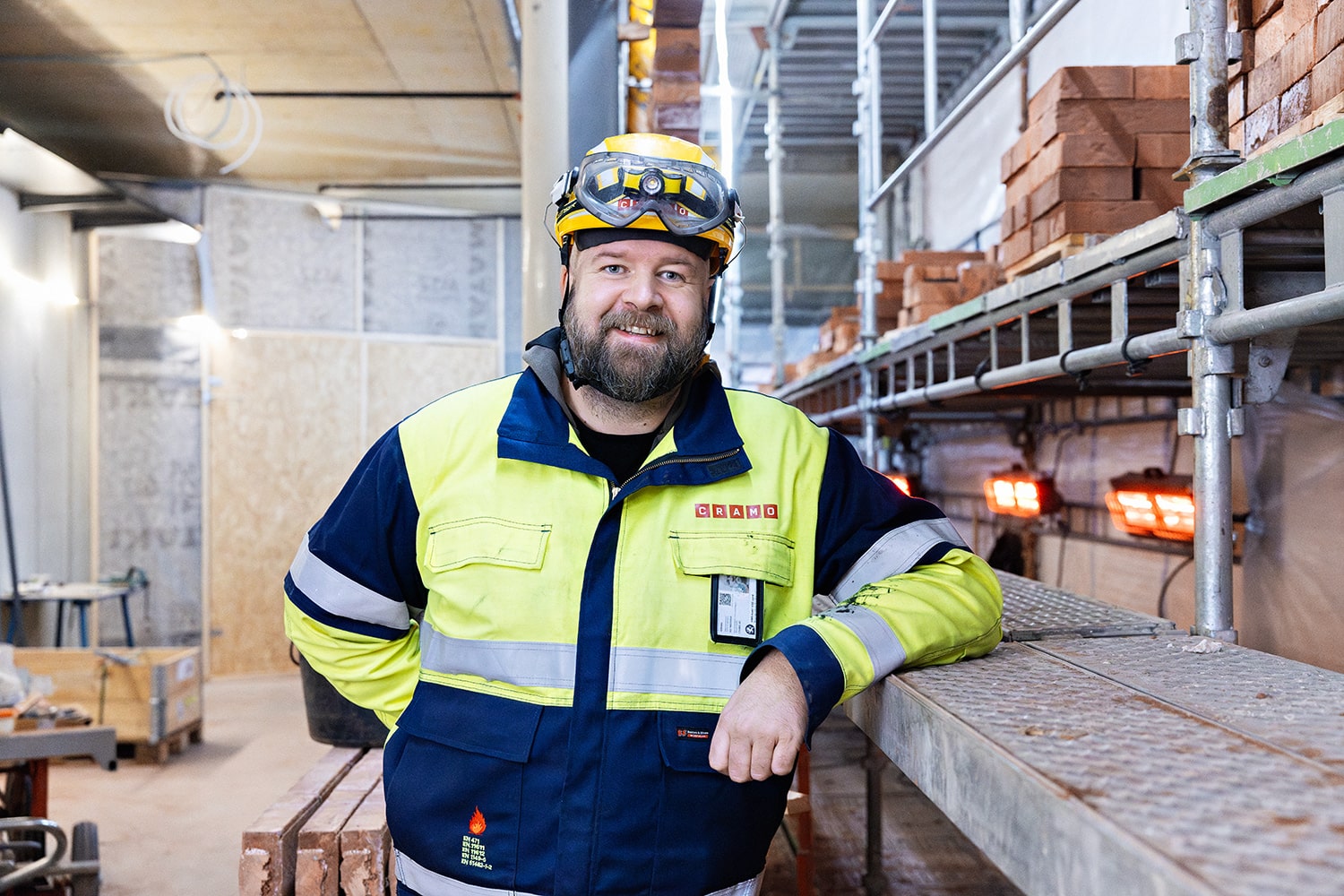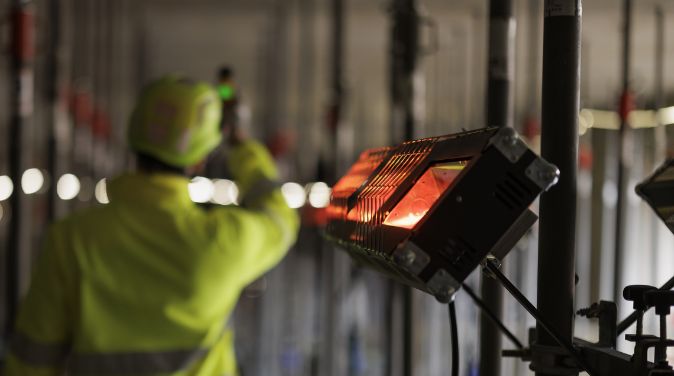


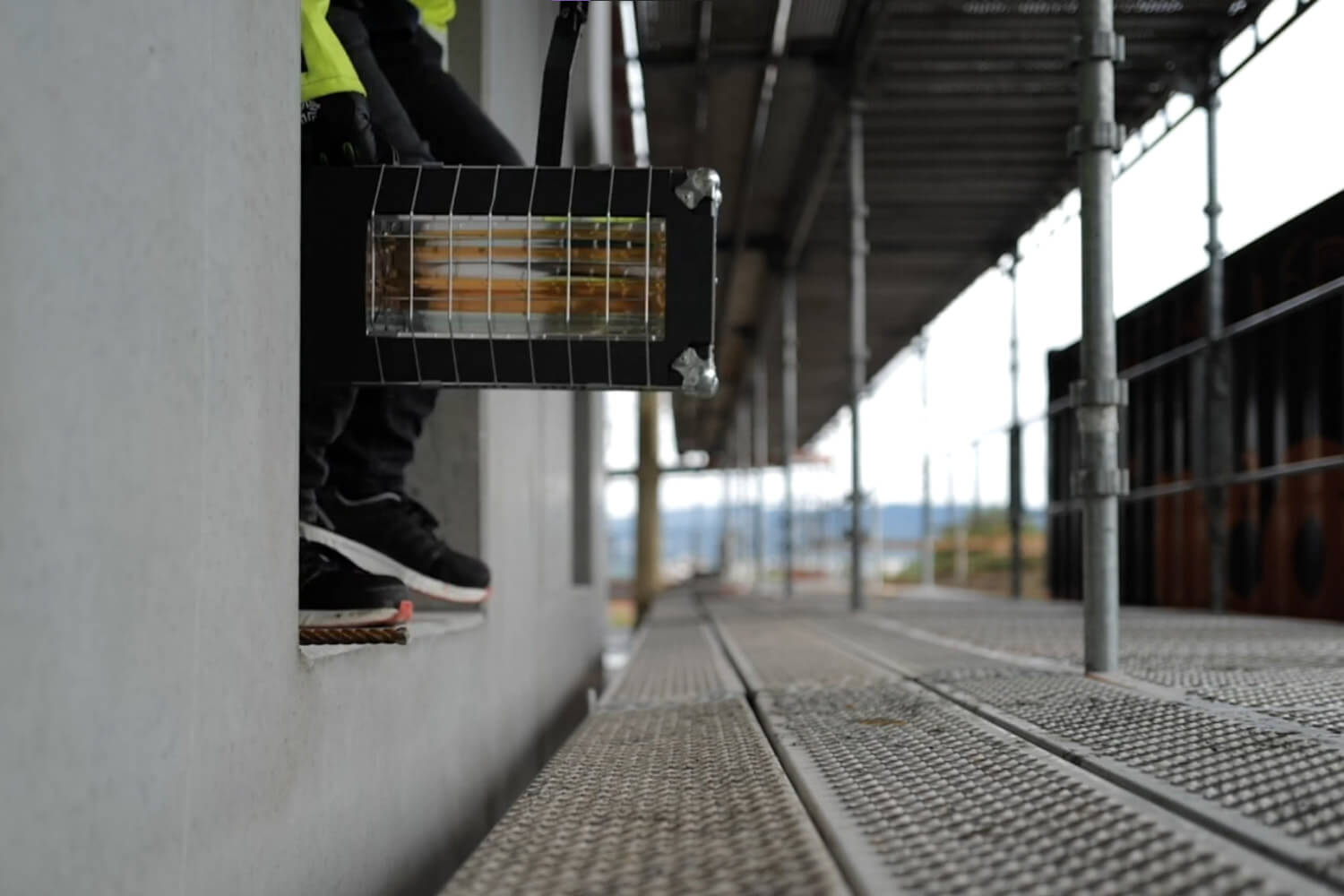
UCO, one of the country’s largest providers of rental equipment for construction sites, tested electric radiant heaters from Suncon. The result was a major order and further collaboration.
The environmental foundation Zero has stated that the construction industry has moved “from being a purchaser of emissions to being a purchaser of solutions” when it comes to reducing emissions at construction sites and implementing more energy-efficient solutions. The industry is undergoing a green transition at every level, and Suncon – already the nation’s leading supplier of complete energy solutions for households and businesses – is very much part of this shift.
This was demonstrated in the first project they carried out with UCO, where diesel was replaced with electric radiant heaters.


Electric and Emission-Free
UCO is one of the country’s largest rental companies for complete construction site solutions. As the company, like much of the industry, is transitioning to more environmentally friendly operations, they decided to try out emission-free electric radiant heaters from Suncon.
– The trial was successful, says Rune Eriksen at UCO.
– Electric radiant heating is the way forward
Propane is a fossil fuel and does not align with the environmentally friendly path we’ve chosen, so we needed a new solution.
– Rune Eriksen, UCO
– I represent a specialist department for heating and drying within UCO. We’ve collaborated with Suncon for many years, using gas-based heating. Many in the construction industry have already become fossil-free, and we are also part of the green transition. Propane and diesel are fossil fuels that don’t fit with the environmental direction we are taking, so we needed a new solution. In early summer 2019, we spoke with Suncon, who had been looking into another type of radiant heater that was electric. We saw that these could be suitable for façade heating.
A Successful First Test
We set up scaffolding with electric radiant heaters and carried out tests and measurements. The results were very promising, Eriksen explains. The next step was to test the heaters in practice.
We delivered equipment to a large housing project Skanska was running at Ulven, and decided to test the radiant heaters there. The challenge was that it was a very tall building, which makes it difficult to direct the heat where it’s needed. With other forms of heating, you end up heating a lot of air, which becomes very energy-intensive.
– The test at the Ulven construction project was successful, Eriksen adds.
– Especially those working on-site were very satisfied. I’ve worked in this field for many years and have a lot of experience with heating.
– Rune Eriksen, Heating Specialist, UCO
I also have experience with radiant heaters, but mostly propane-based. They produced good heat, but involved a lot of hassle with large propane hoses, connections, and so on. Personally, I have great faith in these electric radiant heaters and believe this is the way forward.
From Fossil Fuels to Zero Emissions
Leif Bjørnar Hansen at Skanska confirms that the test was successful. He also believes electric radiant heaters are a solution for the future.
– We tested the heaters during winter, in February, and they worked very well. The difference is that you have to calculate how much electricity you’ll need, so you can set up the right infrastructure and order enough power. On the other hand, you avoid the disadvantages of propane heating, like explosion risk and similar hazards. At Ulven, propane wasn’t even an option. And diesel is being phased out – that’s the direction society is going.
Hansen says he was very satisfied with the results himself, and that the construction workers were even more pleased.
- Efficiency improved because the heat was directed exactly where people were working. Other solutions consume more energy since they heat much more air. I believe this is the way forward – especially if we’re thinking green.
Some minor adjustments were needed, as with any new solution – for example, it could sometimes get too hot for those working on-site. But overall, this was a success.
Significant Reductions
A concrete sign of UCO’s satisfaction is that they subsequently ordered 60 complete units of electric radiant heaters, says Diego Andreas Pebaqué at Suncon, the supplier of the heaters.
Sixty complete units is a very large order. It shows they are satisfied and committed. For this delivery, we’ve included adjustments such as temperature control to prevent energy waste and overheating. Through our close collaboration and pilot project with one of Norway’s leading rental companies, UCO, we’ve been among the first to meet industry demand with a zero-emission heating product that can contribute to significant reductions in fossil energy consumption and costs on construction sites. We look forward to continuing this exciting partnership with UCO.
From 2022, it will be prohibited to use fossil oil for heating construction sites. According to the Norwegian Environment Agency, this is an important step in reducing emissions in the building sector.
– In recent years, more and more companies in the construction industry have adopted climate-friendly alternatives such as district heating, electricity, or biofuels. A ban on mineral oil will further accelerate the transition from fossil to renewable construction heating, says Ellen Hambro, Director General of the Environment Agency.